

Read time: 3min
Every week, I hear the same story.

America dominates.
China scales.
Europe regulates itself into irrelevance.
The “declining continent.”
The “museum economy.”
The “sclerotic model.”

But what if that narrative is simply wrong?
What if Europe didn’t fall behind…
it chose a different definition of winning?
The growth myth
Let’s start with the big claim:
“The US is leaving Europe in the dust.”
On the surface, US GDP growth looks stronger.
But two basic corrections change the story:
Population growth. The US population has grown faster. That mechanically boosts total GDP.
Cost of living. Comparing GDP at market exchange rates exaggerates US wealth by nearly 40% because prices are much higher in the US.
Once you adjust for purchasing power:
Since 1990, US GDP per capita has grown 70.1%
EU GDP per capita has grown 62.5%
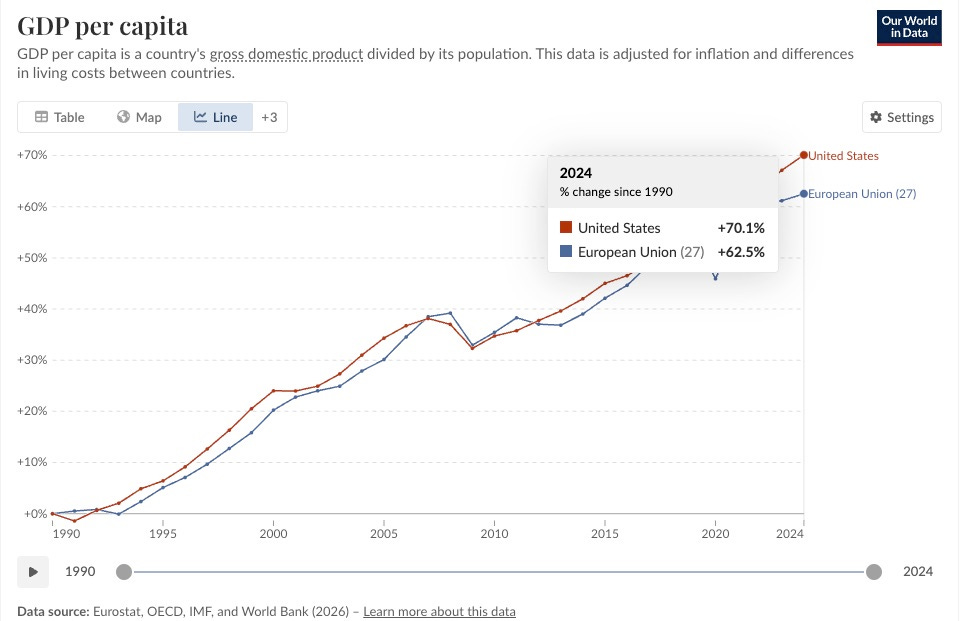
That’s 1.6% annual growth in the US versus 1.5% in the EU.
That’s not an economic miracle.
That’s statistical nuance.
The productivity myth
Another claim: Europe is unproductive.
Let’s look at output per hour worked.
US: $81.8 per hour
Western Europe: $83 per hour
EU overall: $71.1 per hour
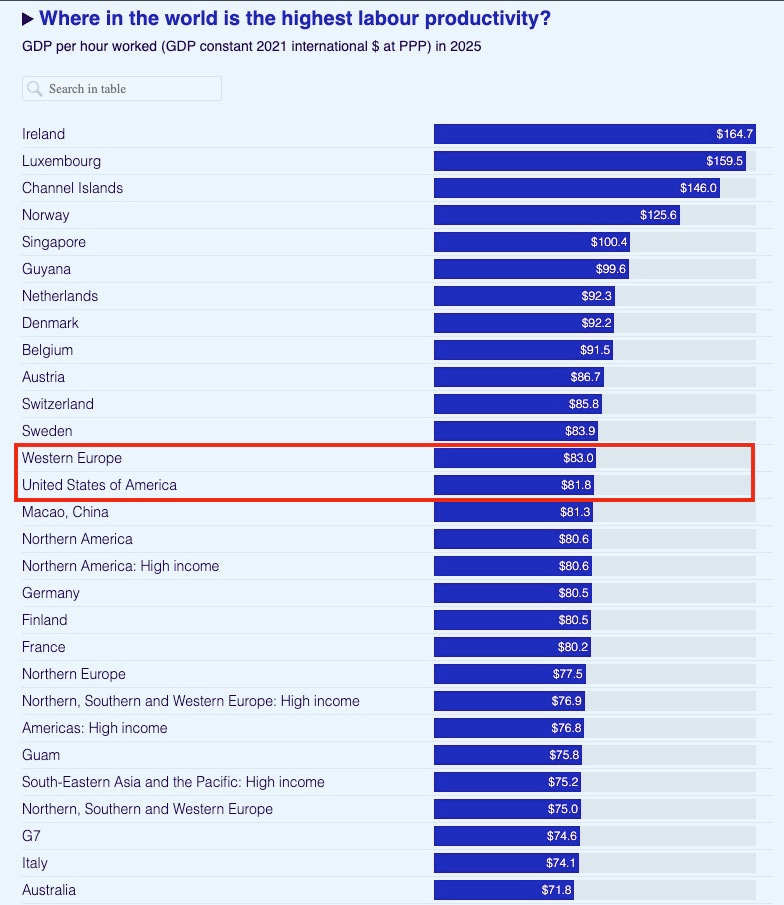
In the core EU economies of Germany, France, Italy, Spain, the Netherlands, and Belgium, productivity per hour is virtually identical to the US.
The difference in GDP per capita is mostly this:
Europeans work fewer hours.
More vacation.
Shorter weeks.
That’s a choice, not a failure.
The prosperity blind spot
GDP alone misses something fundamental.
Europe delivers:
Longer life expectancy
Lower inequality
More leisure time
Lower carbon emissions per capita
All with broadly comparable productivity.
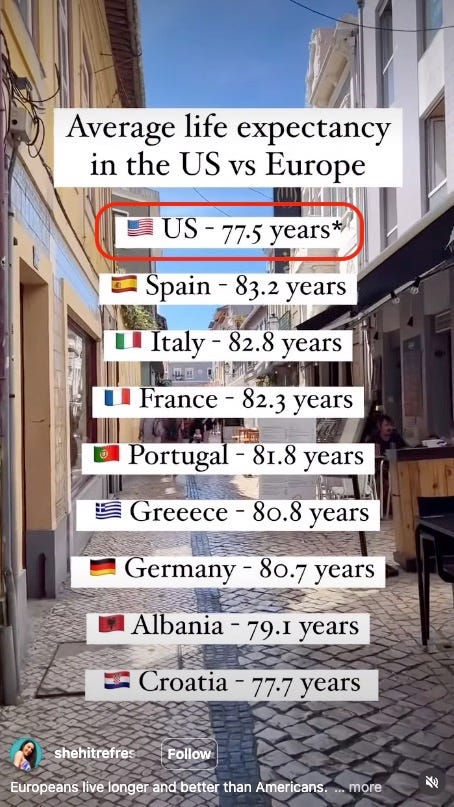
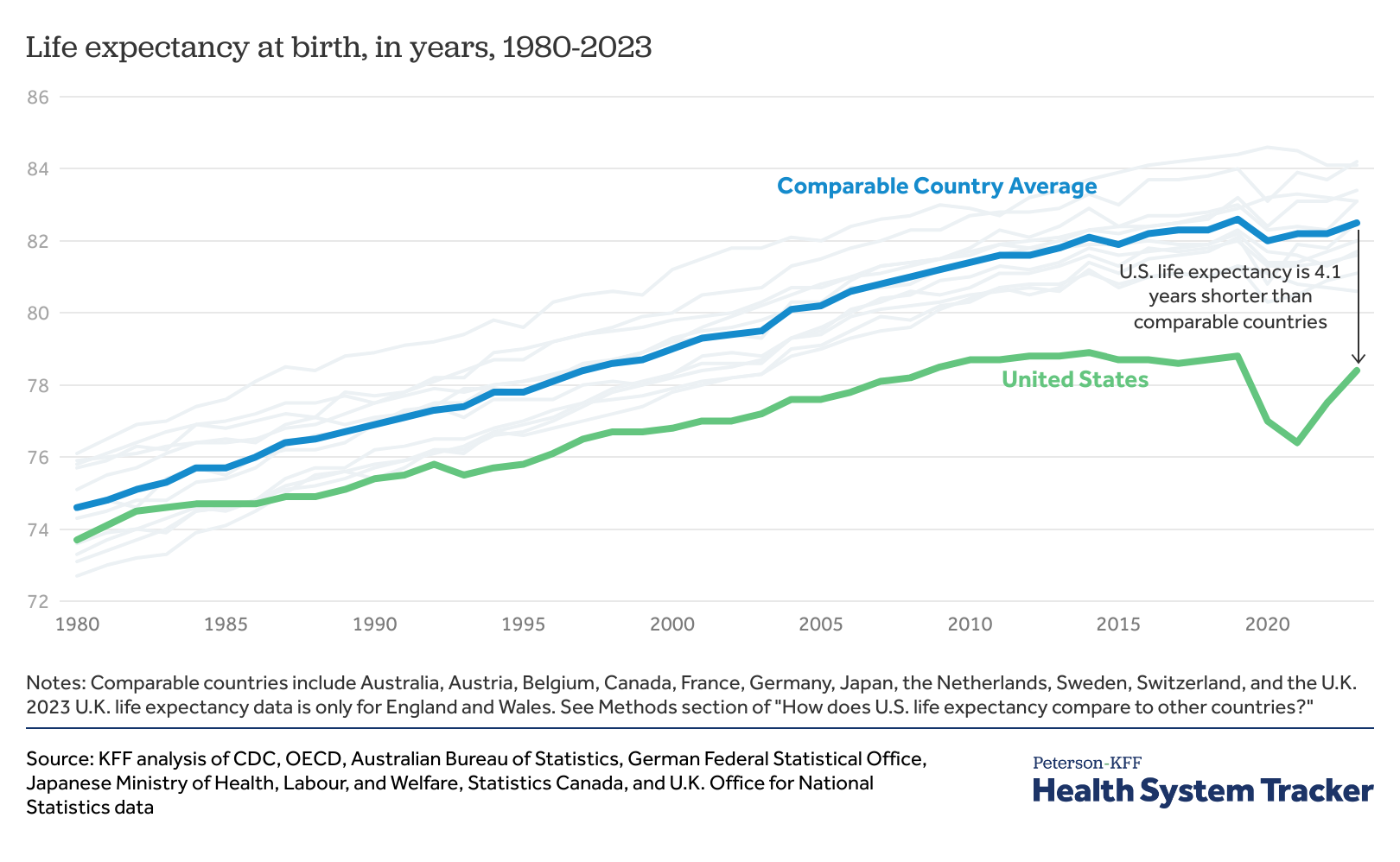
If your definition of prosperity includes time, health, equality, and environmental footprint, Europe’s model looks… surprisingly effective.
The carbon adjustment nobody talks about
Here’s where it gets interesting.
If you correct GDP for carbon externalities, the picture shifts again.
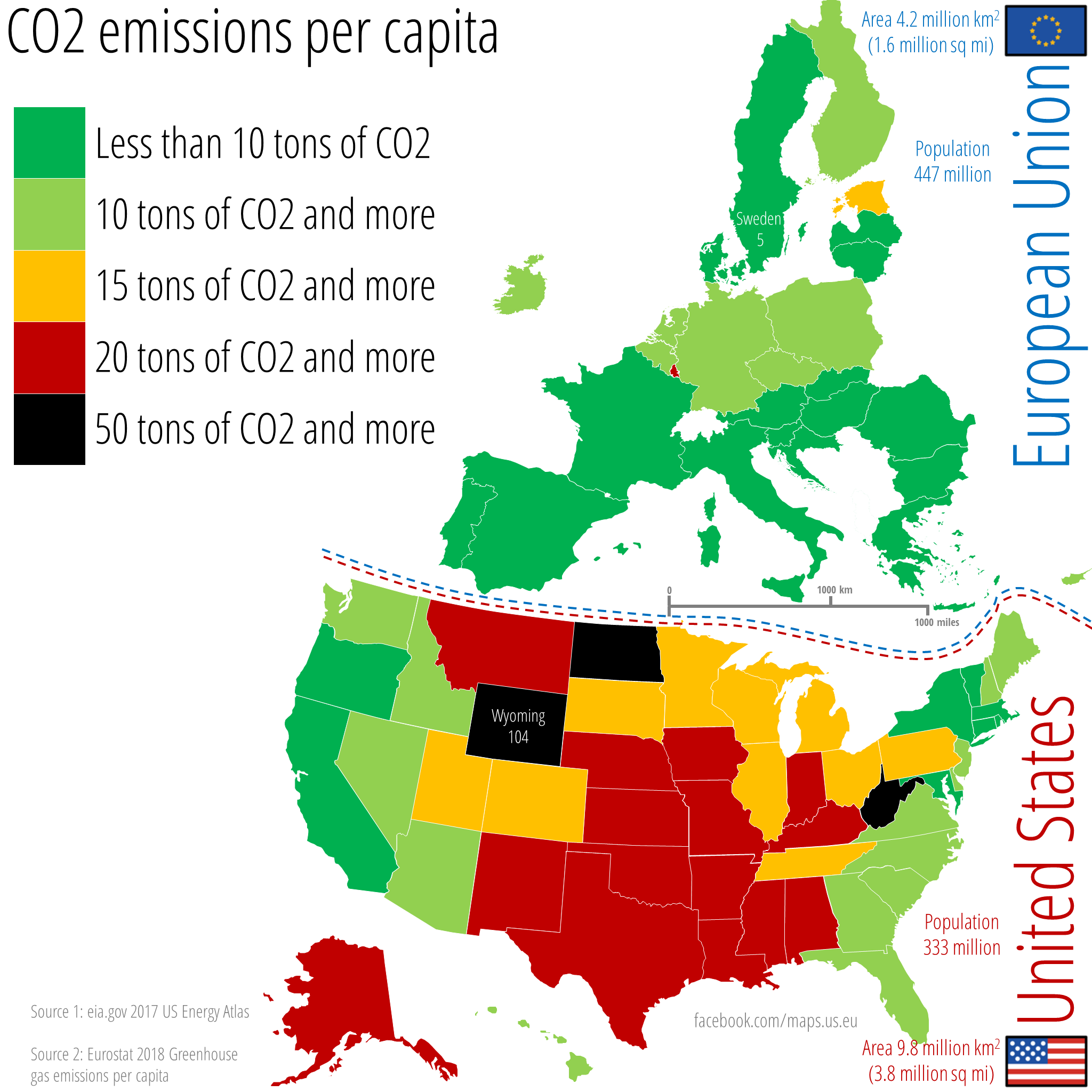
The US produces slightly more output per hour, but with significantly higher emissions.
Europe produces slightly less per hour, with materially lower emissions.
If we’re entering a world where carbon constraints become binding, that difference compounds.
Sobriety might turn out to be a competitive advantage.
The uncomfortable possibility
Maybe Europe didn’t lose the game.
Maybe it optimized for:
Collective health
Social stability
Leisure
Environmental restraint
Institutional trust
Instead of maximum quarterly acceleration.
The US optimized for scale and capital velocity.
China optimized for industrial dominance.
Europe optimized for societal balance.
You can argue about which model scales best into an AI-constrained, energy-hungry future.
It is time for Europe to assert its values and defend its development model loud and clear.
One caveat
Europe is not yet symbiotic with nature.
It is less carbon-intensive than the US, yes.
But biodiversity loss, overconsumption, and externalized extraction remain real problems.
The next frontier isn’t deregulation.
It’s ecological alignment.
The narrative says Europe is falling behind.
The numbers say something more nuanced.
And maybe (just maybe) societal prosperity is not measured by how fast you grow, but by how well you live.
Founder tools that will give you the ultimate unfair advantage:
📌 The Ultimate Investors List of Lists (12,000 VCs, FOs, Angels)
🦄 40 pitch decks that built Unicorns (how Airbnb, Coinbase, Canva got funded)
⚡️ The Ultimate Notion Data Room (all key docs you’ll EVER need)
🥇 The Most Successful Investor Update Template
📊 The Only Finance Tracker Your Startup Needs
And here are the capital allocators most founders never talk to:
🇺🇸 America’s hidden capital. 1,159 verified family offices
🇪🇺 Europe’s hidden capital. 2,656 family offices
🌏 3,250 Australian and Singaporean family offices
💰 316 female angels in Europe
Hi Yoann, thanks for your weekly inspiration.
I think you forgot one other important factor: debt.
U.S. debt grew much faster than EU debt (at least since 2010). While Europe’s debt-to-GDP ratio rose from about 68% to 88% between 2010 and 2023, U.S. debt jumped from roughly 55% to 122% over the same period.
Spot on. Europe optimized a different set of variables than the US did - and this benefits its citizens greatly. Having lived in the US, China, and Germany as an adult, there is no question in my mind that Europe is “winning”, even if the metrics that the US and China use to measure success say otherwise.
Europe has been optimizing humanity - as evidenced by its life expectancy and happiness ratings. GDP is a useless metric for all but the wealthiest Americans. Who cares if our GDP is high when it comes from debt, defense spending, and exploitation of workers?
Not all that counts can be quantified, and not all that is quantified counts. Europe understands that.