

Read time: 3min
Energy shocks have a funny way of changing people’s minds.
A few years ago nuclear power was a relic of the past.
After Fukushima, most Western countries started shutting reactors down.
Germany went all in. Others followed.
The story was simple. Nuclear was dangerous. Expensive. Old. Wind and solar would take over.
Fast forward to today.
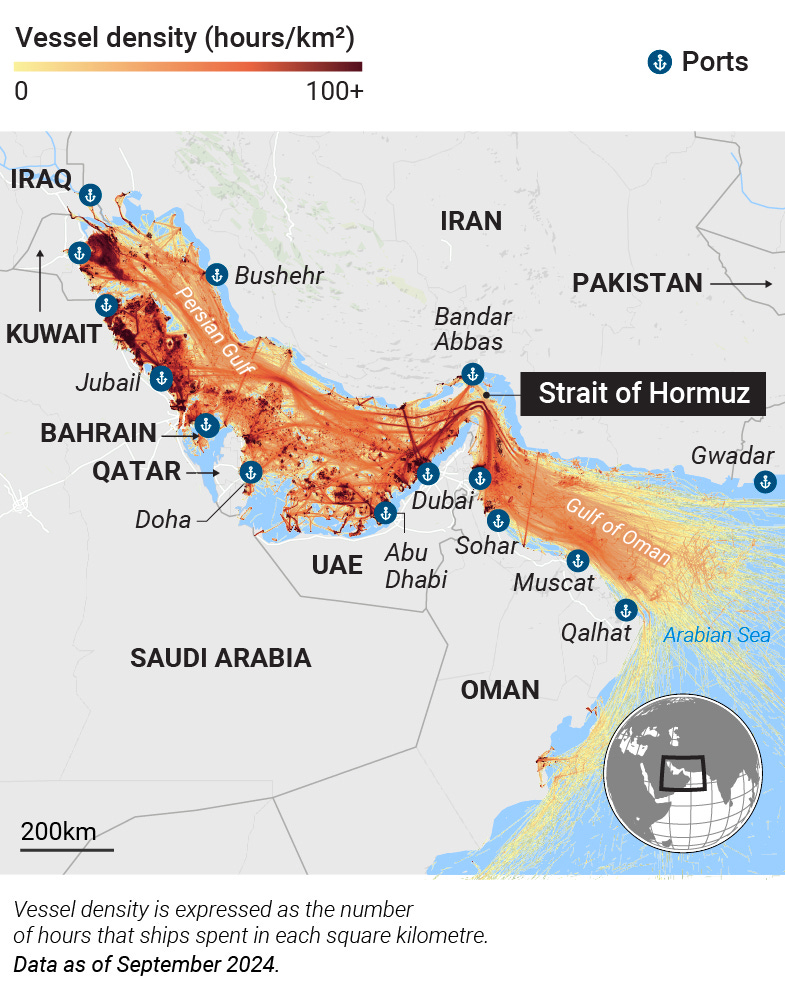
The war around Iran disrupts roughly 20 million barrels of oil per day moving through the Strait of Hormuz.
That chokepoint alone carries a huge share of the world’s oil and gas.
Suddenly the mood changes.
Again.
Energy systems look great when the world is stable. Trade flows. Shipping lanes stay open. Allies stay friendly.
But when geopolitics gets messy, the cracks appear quickly.
Europe is a good example.
In 1990 roughly 30% of European electricity came from nuclear power.
In 2026, it is 15%.
Instead of domestic nuclear generation, Europe filled the gap with imported fossil fuels. Russian gas. Middle Eastern LNG.
And since 2019, massive US LNG imports.
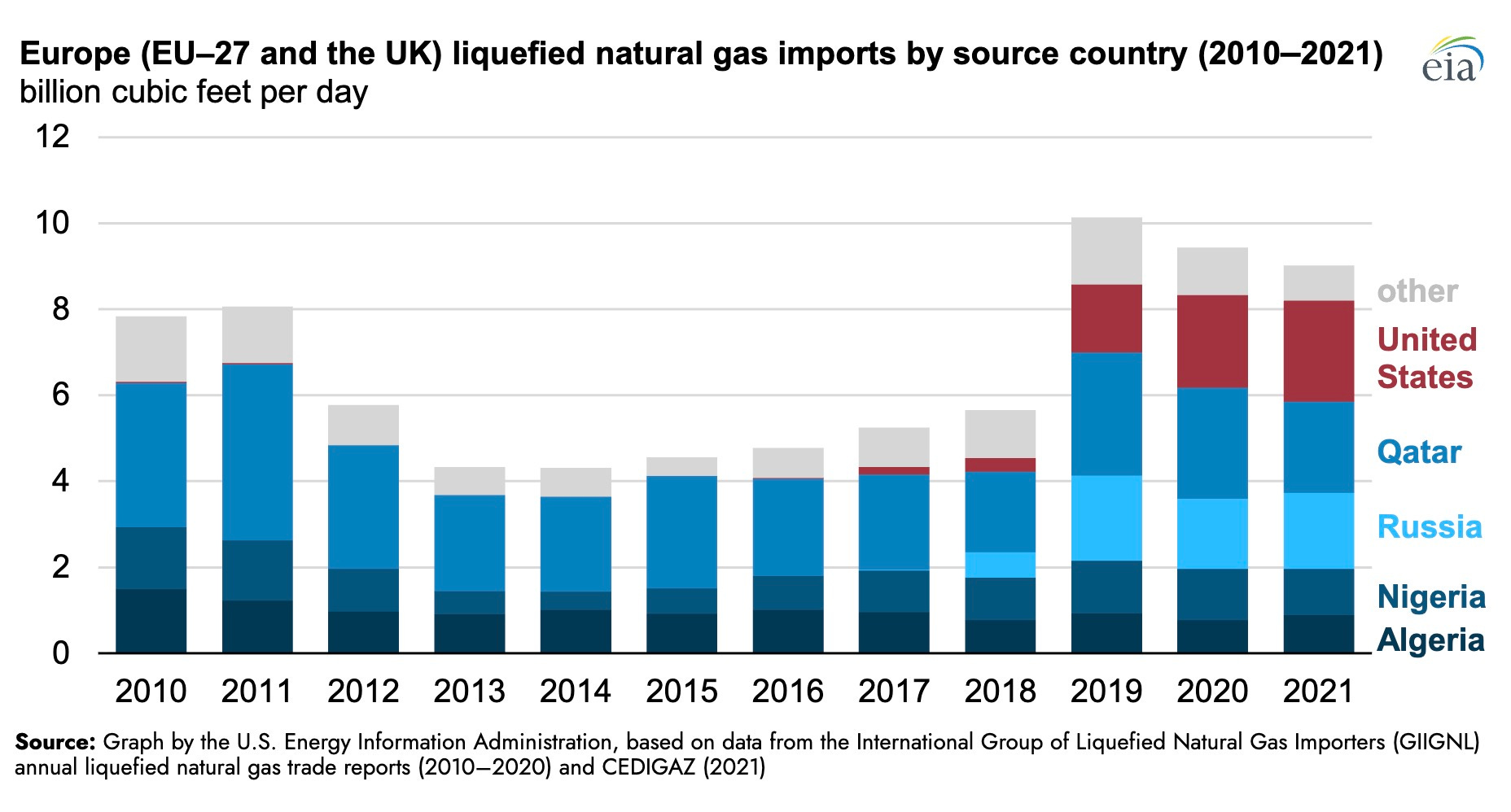
And those markets are volatile by nature.
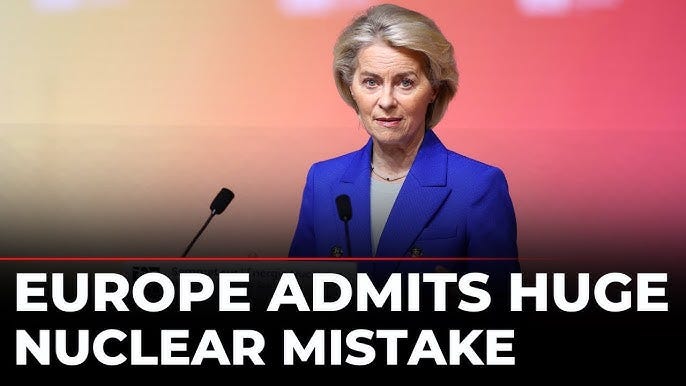
Even Ursula von der Leyen admitted it this week. Europe turning away from nuclear power was a ”strategic mistake”.
One thing nuclear does extremely well is something nobody talks about.
Fuel logistics.
A nuclear plant can run for almost two years on a single fuel load. Utilities usually keep about two years of fuel stored on site.
Compare that to gas plants.
Gas plants need continuous supply. Pipelines. Tankers. Ports. Shipping routes.
Break the supply chain and the plant stops.
Nuclear plants keep running.
That is why countries rediscover nuclear every time the world becomes unstable.
The industry is already seeing the shift.
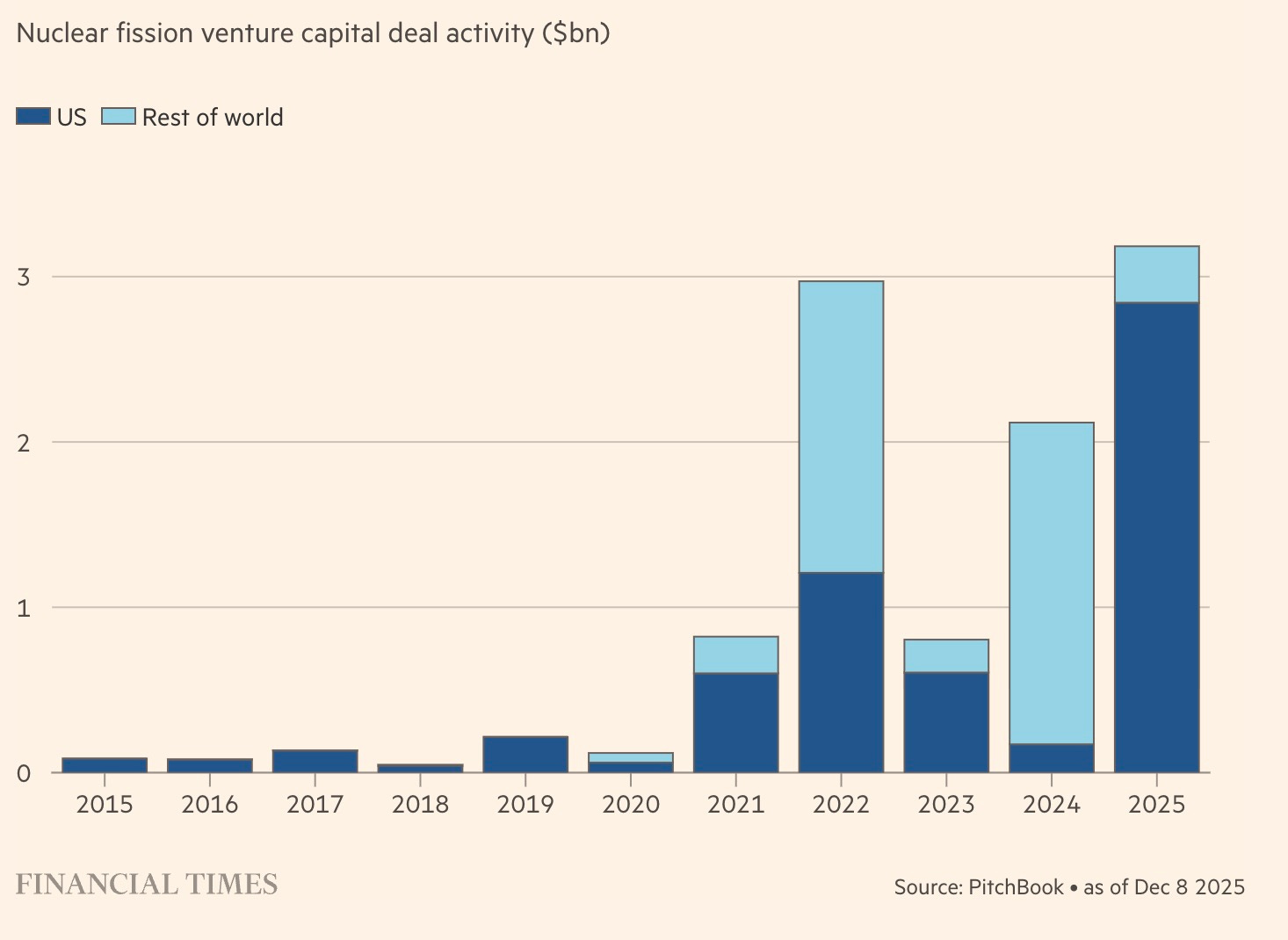
Urenco, one of the largest uranium enrichment companies in the world, now has a $21 billion order book. That is the biggest in its history.
They are expanding enrichment capacity because utilities and governments are quietly preparing for more reactors.
Not because everyone suddenly fell in love with nuclear energy.
Because energy security is becoming non negotiable.
There is another force pushing in the same direction.
AI.
Data centers consume enormous amounts of electricity. Governments want that electricity to be reliable, low carbon, and domestic.
That combination is harder than it sounds.
Wind and solar are essential, but they do not run all the time. You still need stable power somewhere in the system.
That is where nuclear suddenly looks interesting again.
There is also a technological shift that could change the equation.
Small modular reactors.
Traditional nuclear plants produce around 1,000 megawatts. Small modular reactors produce closer to 300. They are designed to be built in factories, shipped to sites, and assembled more quickly.
If that works at scale, nuclear becomes easier to deploy and finance.
Guess who’s leading that revolution?
Surprise, surprise.
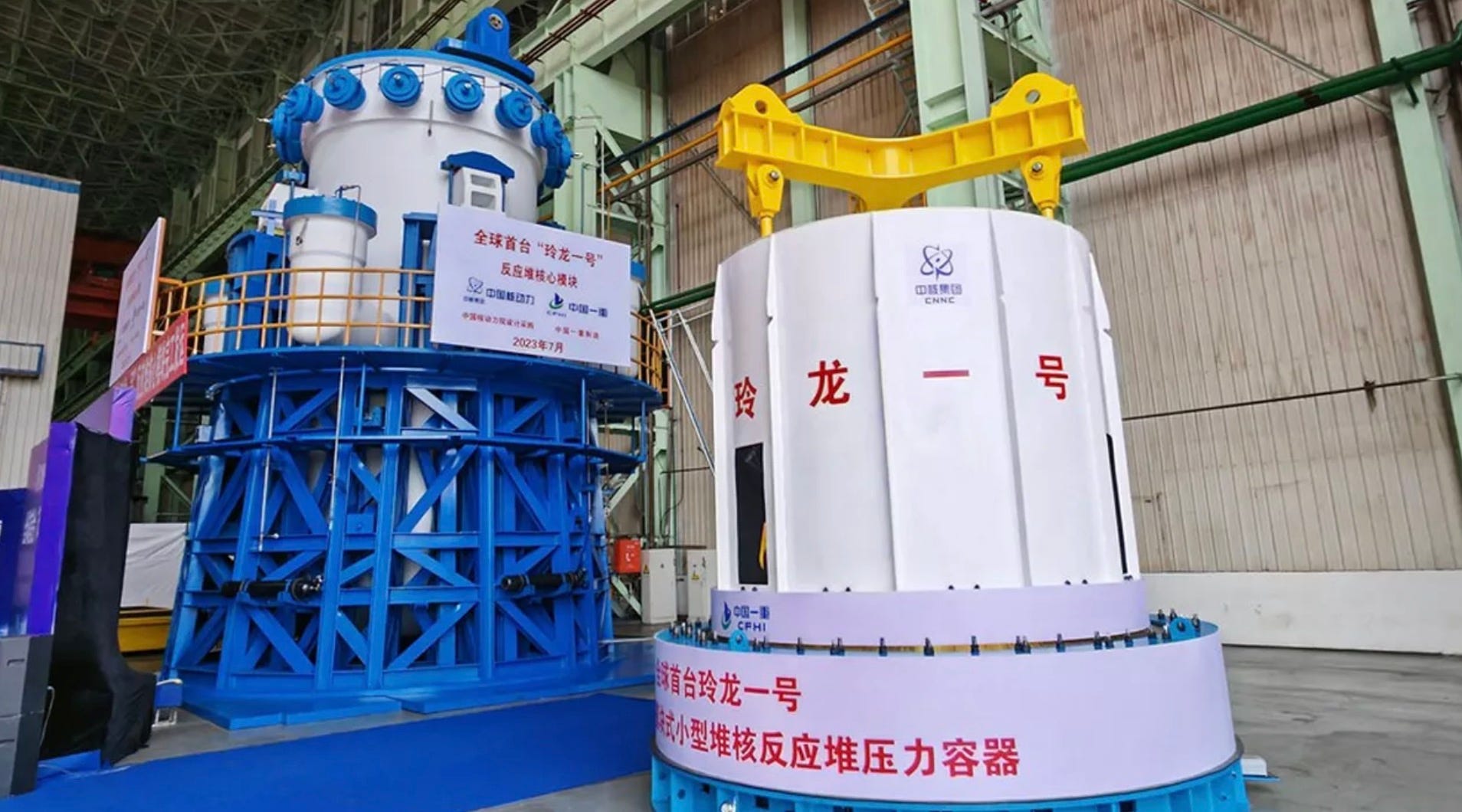
This 125MWe reactor in Hainan Province is designed for electricity, heating, and desalination, and positioning China as a leader
Europe is now talking about deploying these reactors across the continent by 2030. The US, the UK, and Canada are pushing the same direction.
None of this is entirely new.
After the oil crises of the 1970s, France made a radical decision.
Build nuclear plants everywhere.
Within two decades nuclear supplied more than two-thirds of the country’s electricity.
Today, France is the only ‘nuclear native’ economy in Europe.
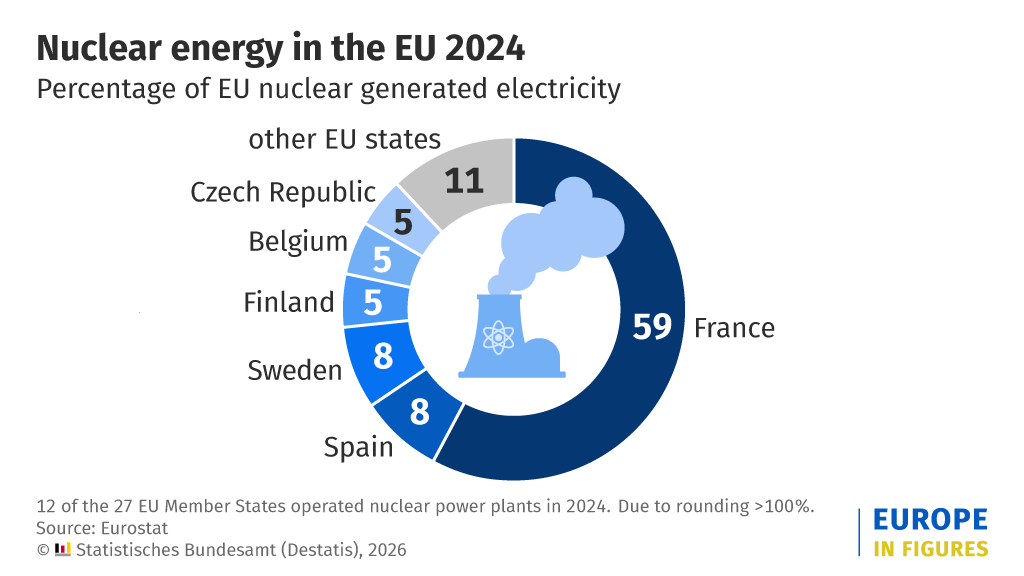
The result is simple. Cheap electricity. Low carbon power. Energy independence.
Energy transitions rarely happen because everyone agrees on ideology.
They happen when reality forces the issue.
Wars. Supply shocks. Price spikes.
Every time the world gets a reminder of how fragile energy systems are, nuclear comes back into the conversation.
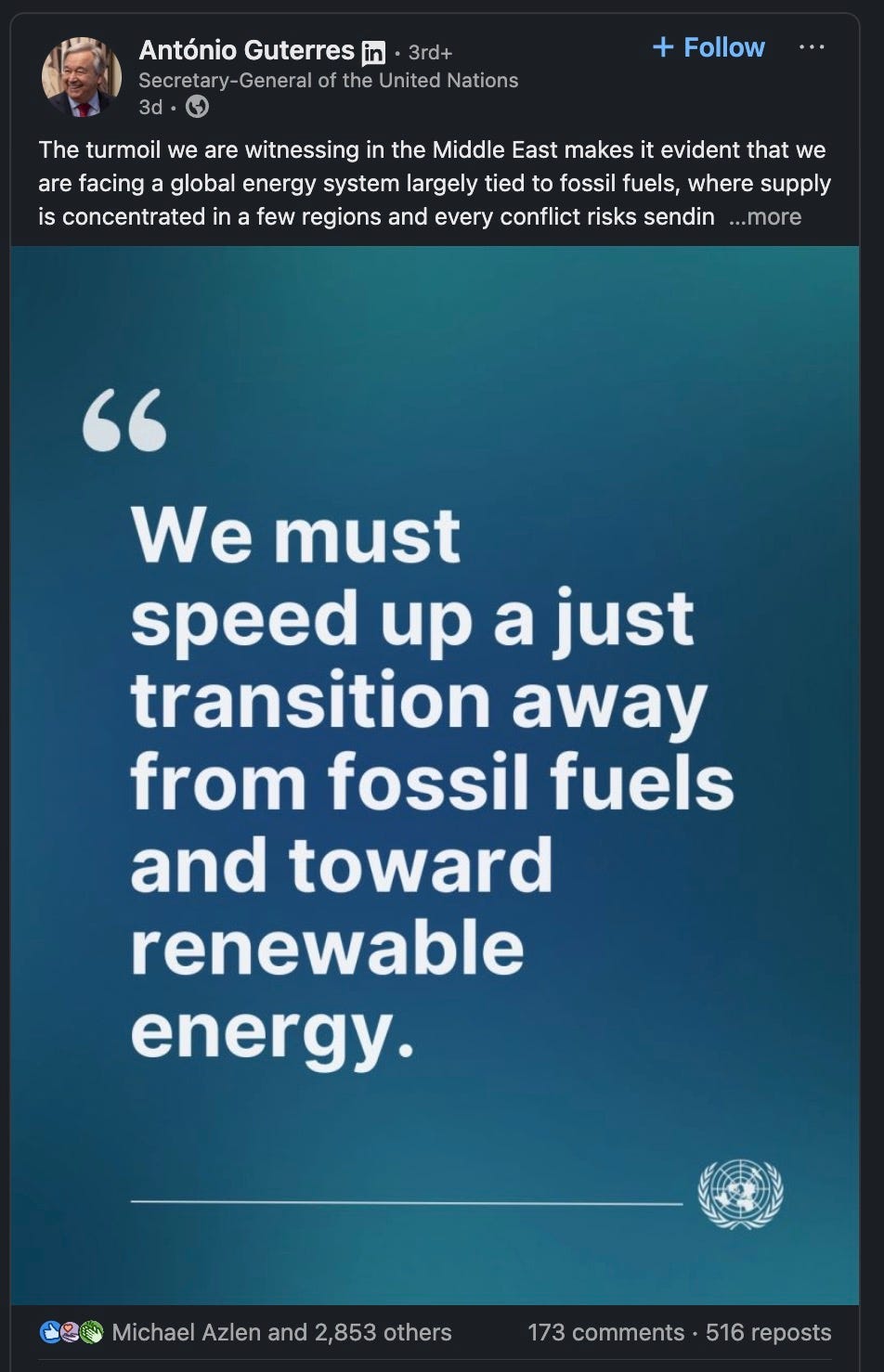
Energy transitions are rarely ideological.
They are forced by reality.
When supply shocks hit, countries stop debating theories and start looking for stability.
That is why nuclear keeps coming back.
Not because it is perfect.
Because in an unstable world, it works.
Raising capital right now?
If you’re raising and want to engineer real momentum in your round, reply.
I’m selecting 10 serious teams for this one-time cohort.
You can learn more about it here.
Well done. Great points! My brother is a nuclear engineer. The cost per unit is dramatically cheaper than any other source. With modular nuclear and offshore deployment we can offset the public fears. Creating an ecosystem that ensures energy dependence, alongside renewables.