

Read time: 4min
Four companies just redrew the map of the global economy.
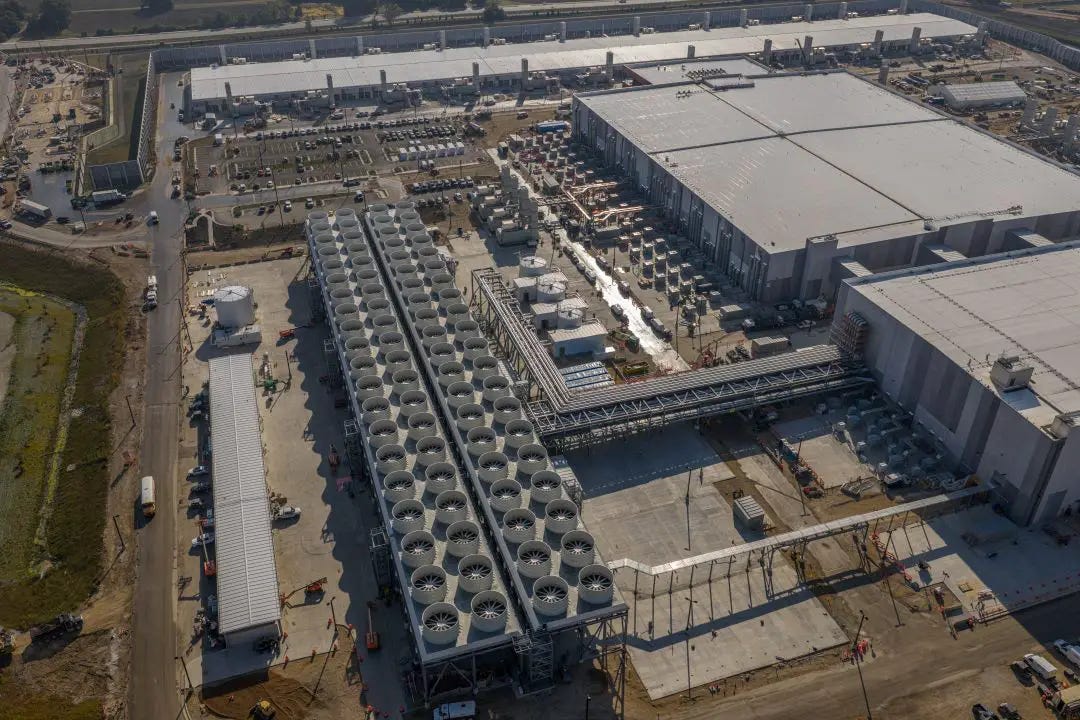
Microsoft. Amazon. Meta. Alphabet.
All four reported earnings this week. All four did the same thing.
They raised their AI infrastructure budgets. Again.
The combined number for 2026 is now $725 billion.
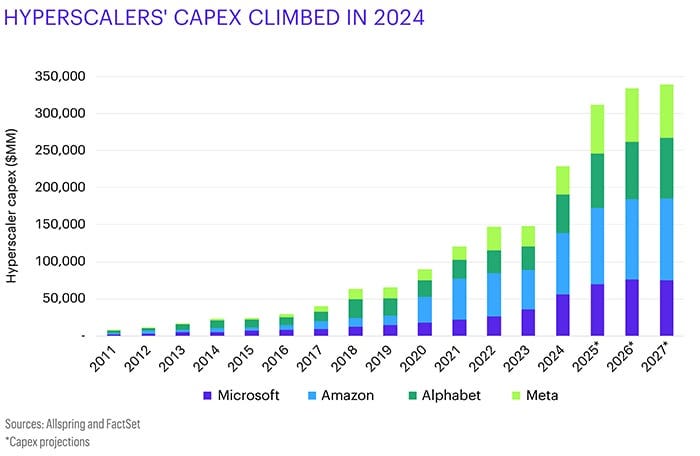
Up from $670 billion three months ago. Up from around $410 billion last year.
For context: that is more than the entire GDP of Switzerland. Spent in one year. By four companies. On data centers, chips, and power.
This isn’t a forecast.
This is committed capex.
The line that should make every founder pause
There is one sentence in the Yahoo Finance write-up I keep coming back to.
“For Big Tech’s biggest companies, all signs continue to point to AI as an opportunity that presents one big risk right now — underspending.”
Read that again.
The most disciplined, cash-flow-obsessed companies on earth have collectively decided that the riskiest thing they can do right now is spend too little.
Meta dropped 6% on its earnings because investors were spooked by the size of its capex.
Meta did not blink.
Microsoft is going to $190 billion in calendar 2026. Up from a $150 billion run rate in January. CFO Amy Hood told investors $25 billion of that is just from rising chip prices.
Amazon is sitting at $200 billion and is now projected to go negative free cash flow by almost $17 billion this year, according to Morgan Stanley.

These are companies willingly torching their cash flow profile to stay in the race.
That should tell you something.
This isn’t a tech story. It’s a power story.
Most people read these numbers and think AI bubble.
I read them and see something else.
A massive, multi-year, irreversible capital reallocation. Not because boards are excited. Because they are scared of being on the wrong side of it.
When Satya Nadella tells investors he is “confident in the return on these investments, given higher demand signals,” that is a CEO writing checks his board would have called insane three years ago.
When Amazon admits its capex now exceeds internal cash generation and they need to tap debt markets, that is not exuberance.
That is conviction.
Morgan Stanley and JP Morgan estimate the tech sector will need to issue around $1.5 trillion in new debt over the next few years just to finance the build-out.
That money is not going into branding decks.
It is going into concrete, copper, transformers, GPUs, and gigawatt-scale power purchase agreements.
The same chokepoints climate founders have been screaming about for a decade.
Why this matters for climate
Here is the part nobody is connecting.
Every gigawatt of data center capacity needs firm, low-carbon, 24/7 power.
Hyperscalers have already become the largest corporate buyers of nuclear in history. They are signing PPAs with geothermal startups, restarting Three Mile Island, funding SMR developers, locking up battery storage at scale.
The AI capex wave is the single largest accidental subsidy to climate infrastructure in the last 20 years.
I wrote a few weeks ago about why nuclear keeps coming back. This is the same force, multiplied.
If you build firm clean power, grid hardware, cooling, transmission, advanced materials, or industrial decarbonization, the demand curve just got rewritten in your favor.
Not in 2030.
Now.
The uncomfortable part
The capital is moving.
The question is whether founders are moving with it.
I have been raising from VCs and LPs for the last 8 years. I am watching a real divide form.
On one side, founders treating AI as a productivity hack. ChatGPT to write a follow-up email. Maybe a deck polish.
On the other side, founders treating AI as fundraising leverage. Compressing months of work into days. Targeting investors with surgical precision. Pressure-testing their own deck the way a Tier 1 partner would, before they walk into the room.
Same market. Same capital environment. Completely different exposure.
Sound familiar?
What is coming Tuesday
For the last year, I have been chewing on every AI fundraising tool I could get my hands on. Most are noise. Some are misleading.
A handful are pure leverage.
Starting next Tuesday, I am opening a weekly series with practical tips on the ones that actually move the needle.
I will show you how I am using VCBoom (previously called Claude Fundraiser) to pressure-test decks, build sharper investor lists, and engineer momentum in a round. Wrote about it here last week if you missed it.
In 8 years of doing this, I have never seen anything this powerful.
Will it get commoditized? Probably. Within 12 to 18 months, every founder will be using something like it.
But for the next 6 to 12 months, the founders and VCs taking the AI fundraising turn early will have a head start that is hard to close.
Especially right now.
The Club is getting smaller. Active LPs are scarce. VCs are reducing deployments.
If you are actively raising, you already know May and June is your window. Right before the summer break.
This is the time to put every chance on your side.
Final thought
When the most disciplined capital allocators on earth tell you the only risk is not spending fast enough, you are not looking at a bubble.
You are looking at a paradigm shift.
The founders who treat AI like another productivity tool will get ground down by the ones who treat it like leverage.
The hyperscalers already made their bet.
The question is what you are doing with yours.
See you Tuesday.
—Yoann
Quick note: I run a small number of brand collaborations each quarter with companies, tools, and VCs aligned with the climate audience here. If that is interesting to your team to reach 18,000 climate decision makers, you can see past campaigns and results here. Always happy to chat.
Yeah Zuck is betting the farm on AI. Curious to see how things will turn out for META. Feels like he's on a personal race with Elon
Dear Yoann
Im keen to supply SMR n other Alternate Energy for Hyperscalers and other DCs.....can you help me with tie ups and facilitation.......we can start in India and other countries